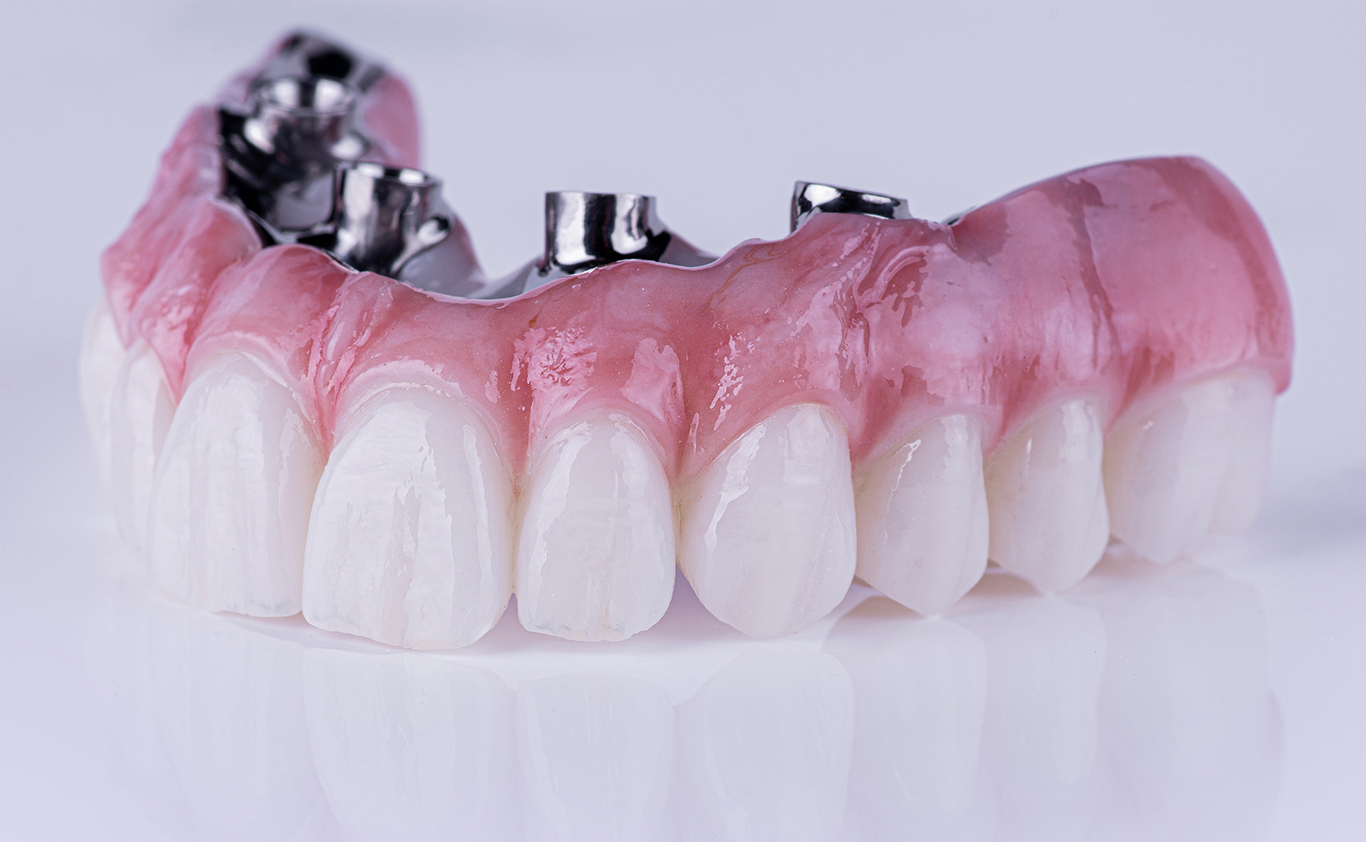
Full-arch implant treatment has always demanded more coordination than almost any other procedure in dentistry. The restorative doctor, the surgeon, the laboratory, and the clinical team all have to move in sync, often across separate systems, separate software, and separate conversations. When that coordination breaks down, the cost is rarely just a longer appointment. It shows up as a rescheduled case, a remake, a patient who returns for the next visit already anxious because the last one ran long.
This affects every full arch practice, whether you are already treating a high volume of cases or you are one of the many general dentists who take on a case or two a year and refer the surgical phase to a specialist. The workflow problem is the same either way, and so is the fix. What separates a practice that grows its full arch volume from one that stays stuck at a case or two a year is rarely surgical skill. It is whether the restorative process is predictable enough to build confidence in, case after case.
Most practices have absorbed these costs for so long that they now seem unremarkable. A chairside denture conversion can run four or five hours past surgery. A lab file gets sent back for clarification because the surgical position and the restorative plan were never quite aligned. A patient leaves the first visit without a clear sense of what happens next. None of this reflects a failure of skill. It reflects a failure of workflow, one largely inherited from a process that was never built to be digital in the first place.
This gap matters more now than it used to. An estimated 40 million or more adults in the US are missing all their teeth in at least one arch, and the population most likely to need full arch treatment, adults 65 and older, is projected to grow by more than 14 percent by 2030. As more patients move toward fixed implant solutions, the practices best positioned to meet that demand will be the ones whose full arch process is predictable enough to scale, whether that means taking on more cases with confidence or simply doing the cases you already have more efficiently.
Where Full Arch Workflows Actually Break Down
A full-arch case moves through several handoffs before a patient ever gets a final restoration, and each one is a point where information can be lost.
Diagnostic records to treatment planning. If the initial scan or CBCT doesn't translate cleanly into the planning software, the surgeon and restorative doctor start the case working from slightly different pictures of the same mouth.
Treatment planning to surgery. A plan that looks precise on a screen still has to survive contact with a real surgical day, and the further the planning software is from the surgical guide and prosthetic team, the more room there is for drift between what was planned and what was placed.
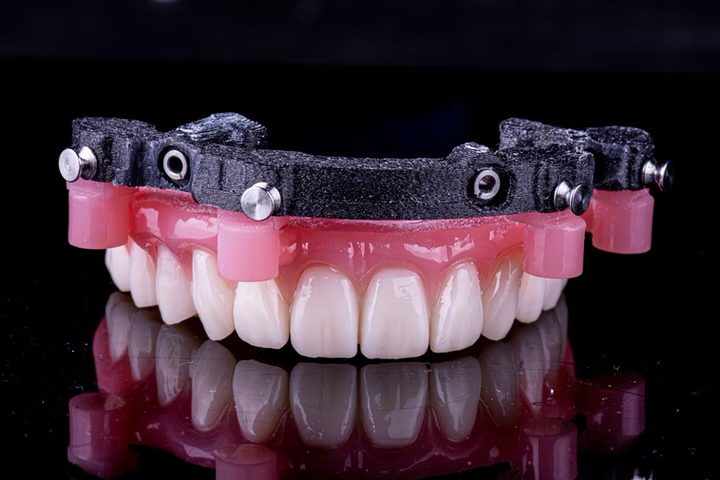
Surgery to provisional fabrication. This is where the classic chairside denture conversion takes place, and where most of the lost time on a full-arch day actually occurs. Implant positions are captured, a conversion is built by hand at the chair, acrylic is loaded and adjusted, and the patient waits.
Provisional to final restoration. Even after a successful provisional phase, a lab that is working from incomplete or delayed digital records ends up guessing at fit, occlusion, and esthetics rather than building from a clear digital thread that started on day one.
A practice can own excellent scanners, planning software, and a capable surgical team, and still lose hours and predictability if those pieces are not actually talking to each other.
“Technology alone does not produce a successful outcome. A connected workflow does.”
— Dr. Barry Goldenberg, Barry S. Goldenberg
What Changes When the Workflow Is Actually Connected
The alternative is not more technology. It is a workflow that maintains a single continuous digital thread from the first scan to the final restoration.
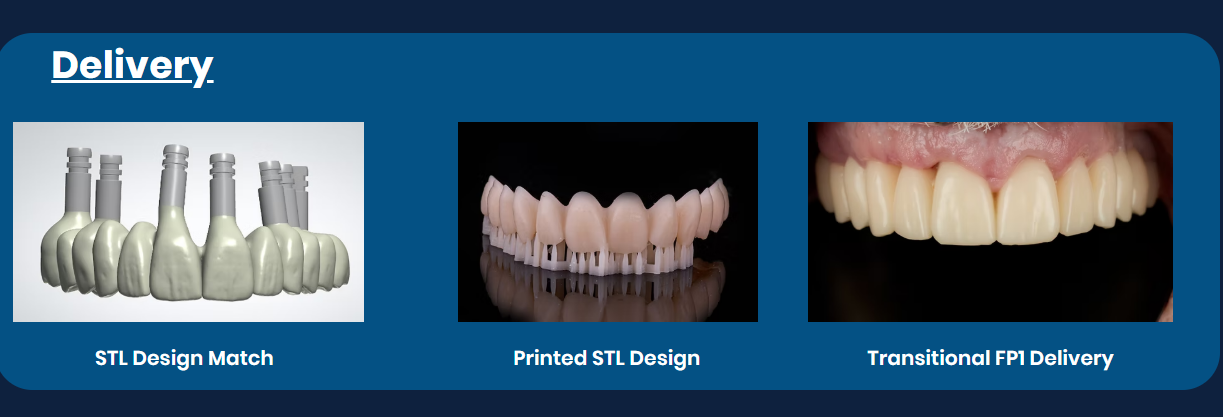
That kind of change does not come from a single new device. It comes from a diagnostically driven treatment plan that carries through to surgery, photogrammetry, or intraoral capture of implant positions that goes straight to a design team instead of a chairside conversion kit, and a provisional that can be designed and produced in a fraction of the time a manual conversion requires. When implant position data moves digitally from the surgical field to the lab, the multi-hour chairside build is replaced by a workflow in which a provisional can be designed in under 20 minutes, whether in-practice or handled by the lab the same day.
The result is not just a shorter appointment. It is a more predictable one. When every step of a case is built on the same digital foundation, the guesswork that used to accumulate between surgery and final delivery has far less room to creep in.
“The Synergy workflow is noticeably more efficient and predictable, giving our team greater confidence throughout the process while reducing concerns around fit, occlusion, and esthetics.”
— Dr. Christian Yaste, Ballantyne Dentistry
Confidence Is a Workflow Outcome, Not a Prerequisite
If you refer full-arch surgery to an oral surgeon and treat it occasionally, the hesitation to take on more of these cases rarely comes from a gap in restorative skill. It stems from uncertainty about whether the process will proceed smoothly once the surgical phase is complete, and that uncertainty is exactly what a connected digital workflow is built to eliminate.
You do not need years of full-arch experience to get a predictable outcome. You need a diagnostically driven treatment plan in which implant position data and provisional design carry cleanly from your surgeon's chair to your own, so the restorative phase does not depend on improvising under pressure. That confidence builds the same way for a doctor on a first full arch case as for one who has completed a hundred, because it comes from the process, not from repetition alone.
Connected Does Not Mean Locked In, and It Does Not Mean Working Alone
Once a practice sees what a connected workflow can do, the instinct is to assume it requires standardizing on a single scanner, a single software platform, or a single surgical protocol. That assumption is exactly what keeps many practices from making the shift.
It does not have to work that way. A truly connected full-arch workflow should accept photogrammetry, iOS-based photogrammetry, intraoral scanning, guided protocols, traditional protocols, or any combination of these, and still deliver continuity from planning through final restoration. The goal is not to narrow how a clinician works. It is to ensure that, no matter how a clinician chooses to work and who they work with, nothing gets lost between steps.
That includes the referring relationship many restorative doctors already rely on. A connected workflow does not ask you to replace your surgeon or take on a role outside your practice. It asks the surgeon, the lab, and the restorative team to work from the same digital plan, so your existing referral relationship becomes more coordinated, not more complicated.
This distinction matters most to practices evaluating a digital full-arch partner. The question is not which technology to adopt or how experienced the team needs to be. It is whether the lab behind the workflow shows up as a partner rather than a vendor.
“We are not just building restorations; we are building restorative systems. Every step in the digital workflow contributes to a more predictable, patient-centered outcome.”
— Jack Marrano, CDT, Absolute Dental Labs
What This Looks Like in Your Practice
For a practice considering the shift, the practical differences show up quickly. Chairside time drops because the provisional is designed and produced digitally instead of built by hand at the chair. Scheduling becomes more predictable because the surgical day is no longer held hostage to a multi-hour conversion. Remakes and adjustments are declined because the lab is working from the same digital record the surgeon used, not a secondhand approximation.
For a high-volume full-arch practice, that predictability protects the schedule and the team. For a practice that still occasionally treats full-arch cases, the same predictability often turns a case-by-case decision into a service line worth building. Either way, the benefit is the same: a workflow that the whole team and the patient can trust.
None of this requires abandoning a treatment philosophy that already works, and none of it requires becoming a full arch specialist before you start. It requires a workflow and a partner built to support the case in front of you.
Denbright is expanding this approach through Synergy Choice, a full-arch workflow built around this kind of flexibility, connection, and partnership. If you're ready to explore what that could look like in your practice, Absolute Dental Services is the best place to start the conversation.