How a fully digital, model-free approach is compressing treatment time, improving accuracy, and restoring clinicians' freedom.
Full-arch implant rehabilitation has always demanded more than clinical skill. It demands precision at every handoff from diagnosis to surgery to the moment a patient leaves with a provisional in place. For years, that precision came at a cost: hours of chairside conversion, physical models, analog impressions, and workflows that varied every time a case crossed the desk.
That model is no longer the standard. A new generation of fully digital, model-free workflows is changing what clinicians can expect from the full-arch process and what their patients experience on the day of surgery.
The Problem With the Old Way
Traditional All-on-X provisionalization relied on chairside denture conversions, adding significant time and complexity to an already demanding procedure. Analog impressions introduced a risk of distortion across the arch. Physical models added fabrication steps. The result was a process where the surgeon, restorative dentist, and laboratory operated in largely disconnected stages, each doing their part but rarely in real time.
The clinical consequences were predictable: longer chair time, more appointments, and outcomes that depended on each handoff going exactly right.
“In the past, full arch surgery would take about 2 hours, and the conversion to give the patient a provisional prosthesis would take another 4 to 5 hours. Now, we have eliminated that.” — Husam Elias, MD, DMD, FACS — SoCal Surgical Arts, Pasadena & Sherman Oaks, CA
What a Fully Digital Workflow Actually Changes
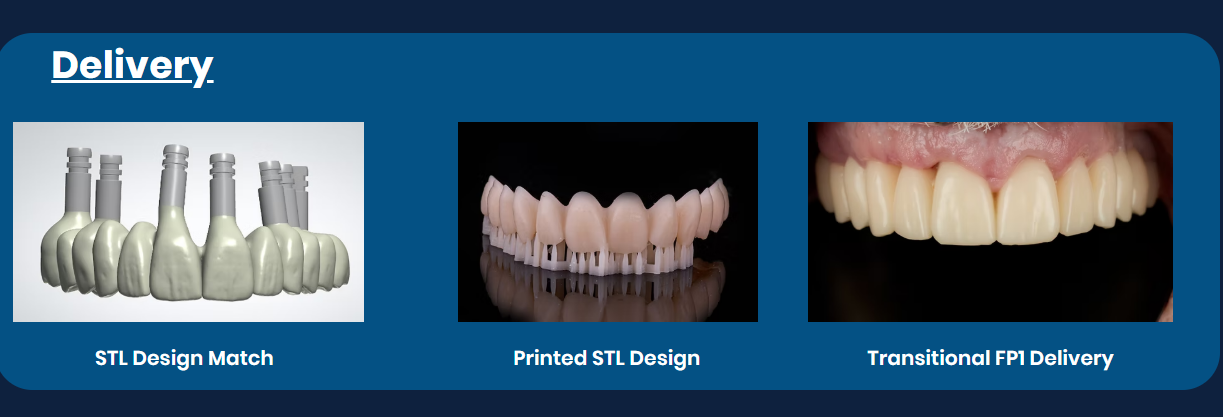
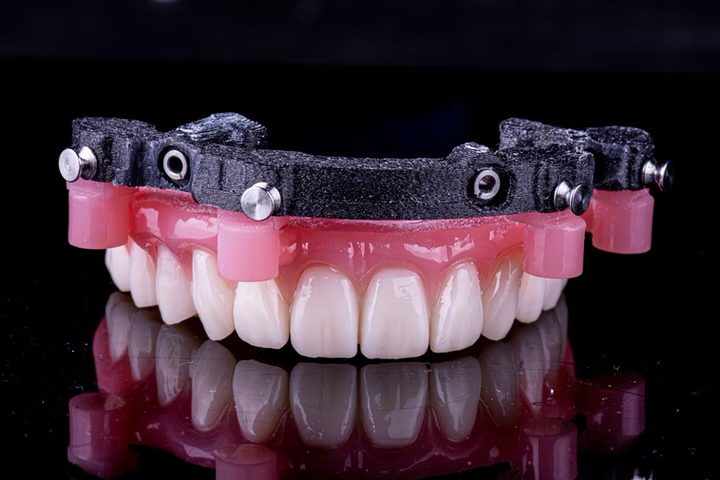
The EZ Load workflow from Denbright replaces the analog conversion model entirely. Using photogrammetry or advanced intraoral scanning, implant positions are captured digitally on the day of surgery. That data is transmitted directly to Denbright’s design team, where STL files are designed and returned in approximately fifteen minutes, enabling same-day local 3D printing of a provisional restoration with no luting, no bite adjustment, and no physical model required.
The provisional is not a placeholder. It is a digitally indexed, esthetically approved prosthesis built from the diagnostic design that was established before surgery ever began. Occlusion, vertical dimension, and smile esthetics are preserved because they were locked in at the planning stage, not guessed at chairside.
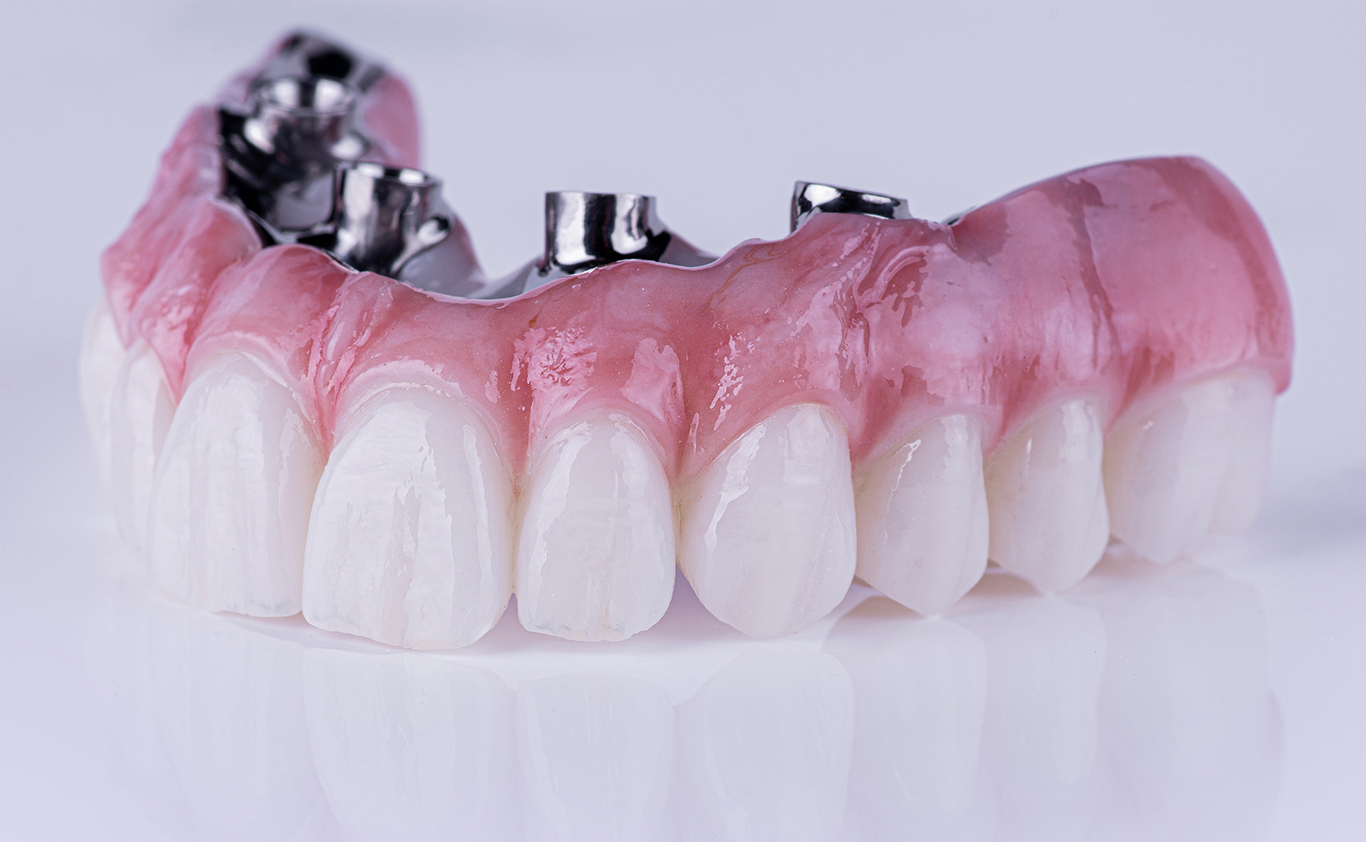
The result is a full-arch case that can be completed in as few as two predictable appointments, with digitally archived files available for rapid reproduction of the provisional or final prosthesis at any point in the future.
“The data that we collect at the surgical provisional, we’re going to carry through all the way to the final. And it’s the communication and the data originally gathered from EZ Load that make all of this possible.” — Conrad J. Rensburg, ND, NHD — CEO & President, Absolute Dental Services
The Science Behind the Standard
The shift toward model-free digital workflows is not a trend. It is the direction the clinical literature is pointing. Recent peer-reviewed research confirms that photogrammetry and advanced intraoral scanning consistently deliver the implant position accuracy required for passive fit across a complete arch, with multiple systematic reviews reporting strong overall evidence of digital accuracy. The ability to capture and preserve that data from surgery through final delivery remains one of the most consequential variables in long-term full-arch success.
Equally important is what happens upstream. Digitally approved diagnostic designs, pre-surgical smile previews, and facially driven planning are no longer advanced techniques. They are the foundation of predictable outcomes and the reason why a case can move from surgical provisional to final delivery with so little friction.
Clinician Freedom Is Part of the Design
One thing the EZ Load workflow was deliberately built to preserve is choice. Not every practice operates the same way. Through Synergy Choice, Denbright accepts photogrammetry, iOS-based photogrammetry, advanced intraoral scanning, guided workflows, and hybrid approaches, adapting to the clinician’s preferred treatment philosophy rather than requiring them to adopt a specific technology ecosystem.
That is a meaningful distinction in a market where some platforms are moving toward closed systems that bundle scanners, software, and lab services, limiting flexibility over time. The EZ Load model was built around the opposite premise: give clinicians access to the most efficient workflow available while preserving their freedom to practice according to their own expertise.
Ready to bring a fully digital full-arch workflow to your practice? Connect with your Denbright lab partner to walk through the EZ Load workflow and find the right approach for your cases. Book a consultation with our team >