Digital planning, data preservation, and in-office 3D printing are changing how clinicians approach complex restorative cases.
Why Is Data Preservation So Important in Complex Restorative Dentistry?
One persistent challenge in full-arch implant dentistry is maintaining the patient's intended restorative position from initial treatment planning through surgery, provisionalization, and final prosthesis delivery.
Traditionally, clinicians could establish an appropriate vertical dimension of occlusion, incisal edge position, and esthetic design before surgery, only to lose some of that information during extractions and implant placement. Reestablishing those relationships afterward can require repeated adjustments, extra appointments, and considerable lab work.
In his Denbright webinar, Simplifying Digital Hybrid Workflows: From Surgery to Final, Conrad Rensburg, CEO and President of Absolute Dental Services, explains how digital hybrid workflows are changing that process.
Rensburg identifies data preservation as one of the most significant advances in restorative dentistry over the past 15 years. Today's digital technologies allow information established during diagnostic planning to carry forward into surgical planning, immediate prosthetic conversion, prototyping, and final restoration.
The objective is not simply to produce a prosthesis faster. It is to preserve the restorative decisions already made by the clinician and patient.
How Does Digital Planning Connect Surgery to the Final Restoration?
Rensburg advocates beginning with the desired restorative outcome and working backward to determine implant positioning, tissue management, and surgical requirements.
Clinicians can integrate digital impressions, diagnostic wax-ups, patient photographs, and CBCT imaging to establish intended tooth positions before surgery. The restorative design then informs implant placement, rather than requiring the final prosthesis to accommodate independently determined implant positions.
This approach is particularly valuable in full-arch cases where restorative space, tissue contours, and esthetic requirements must be considered together.
Rensburg describes how digital reference points, including fiducial markers and strategically retained teeth, help maintain relationships among preoperative scans, surgical records, and postoperative implant positions.
These reference points enable the laboratory to align new implant information with the previously approved diagnostic design. The result is a more direct transition from surgical placement to a digitally designed conversion prosthesis.
He also emphasizes that digital workflows do not eliminate the need for clinical judgment. Fully guided surgery remains valuable when substantial bone reduction or precise control of implant positioning is required. In other situations, a freehand or partially guided surgical approach may be appropriate.
The digital workflow lets clinicians and technicians coordinate prosthetic design with the patient's selected surgical approach.
Why Should Clinicians Think of Temporaries as Prototypes?
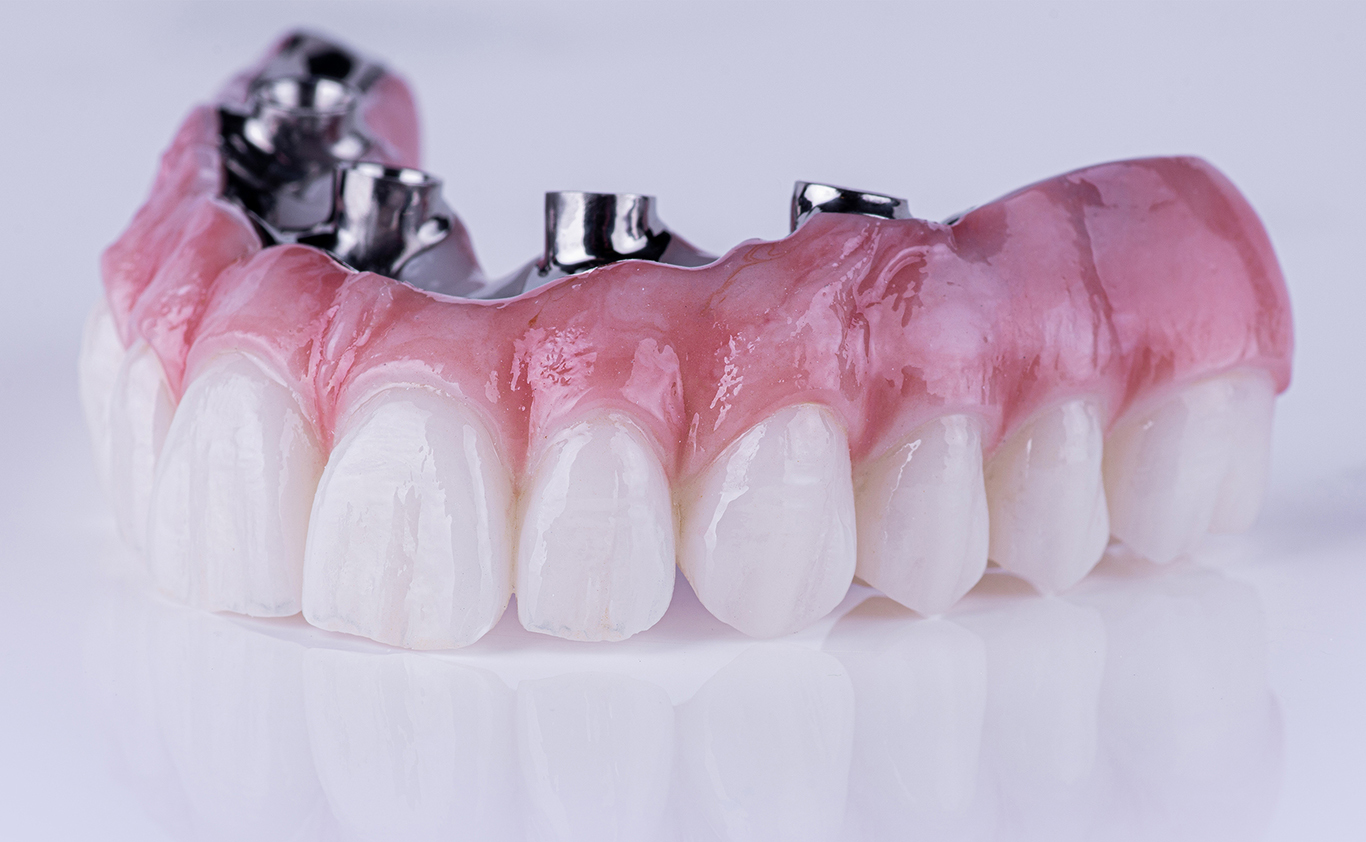
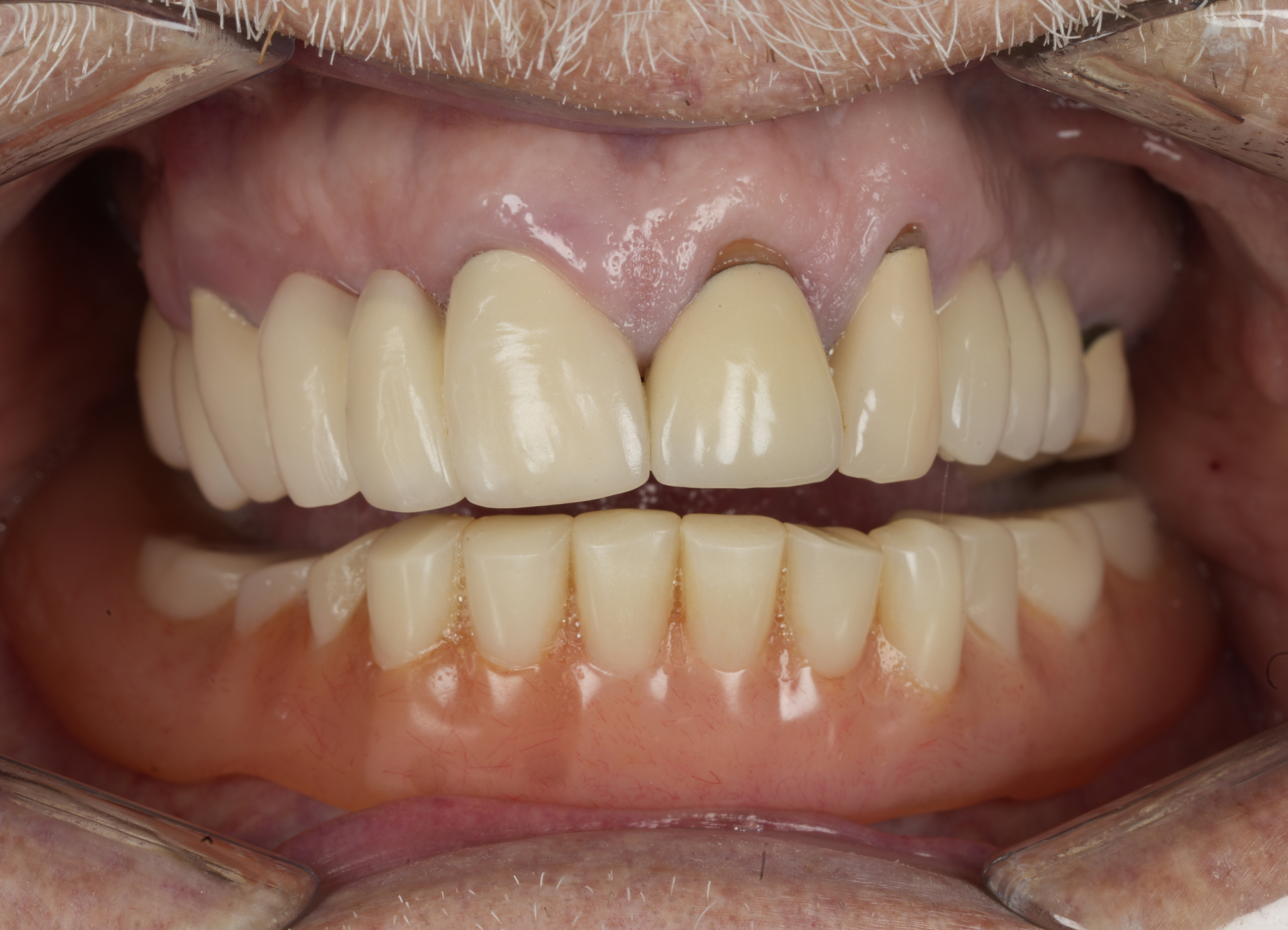
One of Rensburg's strongest recommendations is to reconsider the role of provisional restorations. Rather than viewing a temporary prosthesis primarily as something the patient wears while healing, he encourages clinicians to use it as a functional and esthetic prototype.
A prototype lets clinicians evaluate tooth length, line angles, midline, incisal edge position, occlusion, and tissue contours before fabricating the definitive restoration. Patients can assess the proposed appearance and function while clinicians document needed adjustments. Because the prototype is digitally designed, clinicians can incorporate those changes into the archived restorative file. Clinicians can then fabricate the final prosthesis from an established, clinically evaluated design.
Rensburg particularly emphasizes the value of completing adjustments during the prototype phase when the final restoration will be fabricated from monolithic zirconia. His goal is to avoid making significant occlusal or structural adjustments to the definitive restoration after delivery. This approach also accommodates tissue changes during healing. Clinicians can use a new digital impression to update the prototype without abandoning the original restorative design.
What Role Does In-Office 3D Printing Play?
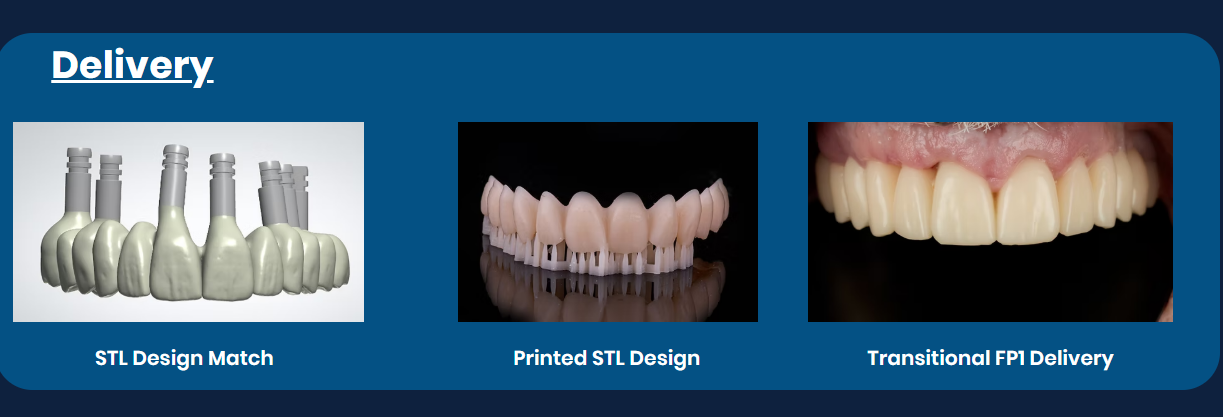
Advances in dental 3D printing make it practical for clinicians to fabricate certain restorative prototypes in their offices. Rensburg describes a collaborative workflow in which the laboratory completes diagnostic planning and digital design while the dental practice handles printing, post-processing, and delivery.
Following surgery or tooth preparation, the clinician captures updated digital records and sends them to the laboratory. The laboratory aligns the new information with the approved diagnostic design and returns a printable STL file. The practice can then produce the restoration using its in-office printing system.
Rensburg reports that his laboratory has reduced design turnaround for many full-arch conversion prostheses to under 20 minutes after receiving the necessary postoperative scans. In one case, the design file was returned in eight minutes. These are examples from Absolute Dental Services' workflow, not guaranteed turnaround times. Rensburg stresses that the speed depends on completing diagnostic planning and coordinating the case before the patient's appointment.
He also discusses how in-office printing can go beyond full-arch implant restorations to include multiunit tooth-supported prototypes, veneers, surgical guides, night guards, and dental models. For clinicians considering in-office printing, the broader opportunity is to connect digital planning with practical chairside fabrication while retaining laboratory expertise in prosthetic design.
How Does Digital Prototyping Improve Collaboration?
Rensburg's presentation challenges the assumption that greater in-office production necessarily reduces the laboratory's role. He describes his own shift in perspective. Initially, he regarded chairside 3D printing as competition for dental laboratories. Today, he sees it as an opportunity for closer collaboration between clinicians and technicians.
The laboratory remains responsible for interpreting restorative requirements, developing the diagnostic design, aligning digital records, and preparing the prosthetic file. The dental practice can then fabricate the prototype and evaluate it clinically. This division of responsibilities can reduce the need to transport physical models and provisional restorations between locations while preserving the value of specialized laboratory design expertise. It also gives clinicians access to a reproducible digital record. If a prototype needs modification due to tissue changes or patient feedback, the archived design provides a starting point for the next version.
The same principle applies to complex tooth-supported restorative cases. By preserving occlusal references during sequential tooth preparation and scanning, clinicians can maintain the planned vertical dimension and restorative relationships.
What Should Clinicians Consider Before Adopting a Digital Hybrid Workflow?
Rensburg's examples illustrate several considerations that influence the success of digital restorative treatment.
- First, diagnostic planning must precede surgery or tooth preparation. Rapid printing cannot compensate for incomplete records or an inadequately evaluated restorative design.
- Second, digital data capture accuracy deserves careful attention. Rensburg discusses using scan aids and fiducial markers to improve reference capture in edentulous arches, where limited anatomical landmarks can complicate intraoral scanning.
- Third, clinicians and laboratories must coordinate the components and restorative connections used in fully digital workflows. Implant scan components, prosthetic interfaces, and fabrication methods must be compatible with the intended restoration.
- Finally, printed restorations require appropriate cleaning, curing, and finishing. These procedures should follow the validated instructions for the selected printing system and materials.
The value of the technology depends on the reliability of the entire workflow, not simply the speed of the printer.
Moving From Provisional Restoration to Predictable Final Delivery
Rensburg's central message is that digital restorative dentistry gives clinicians a better way to preserve treatment-planning decisions.
When the patient's approved esthetic design, occlusal relationships, and restorative positions remain connected throughout treatment, clinicians can use the prototype phase to evaluate and refine the outcome rather than reconstruct information lost during surgery.
This approach applies beyond full-arch implant treatment. Complex crown-and-bridge cases, veneer restorations, and other extensive rehabilitations can benefit from digitally designed prototypes that let patients and clinicians evaluate the proposed result before final fabrication.
For practices considering these workflows, Rensburg's presentation provides a practical look at how digital planning, laboratory collaboration, and in-office printing can work together.
Watch the Denbright webinar: Simplifying Digital Hybrid Workflows: From Surgery to Final
Conrad Rensburg is CEO and President of Absolute Dental Services, headquartered in North Carolina's Triangle region. He earned his four-year baccalaureate degree from Pretoria Tech in 1992 on a full scholarship and holds qualifications in dental technology, specializing in fixed prosthetics.