|
Clinical case courtesy of Barry S. Goldenberg, DMD, MS, St. Louis, MO. Lab work by Absolute Dental Services, a proud member of Denbright Dental Labs. |
Some patients arrive carrying more than a clinical problem. They carry the weight of how it affects their daily lives.
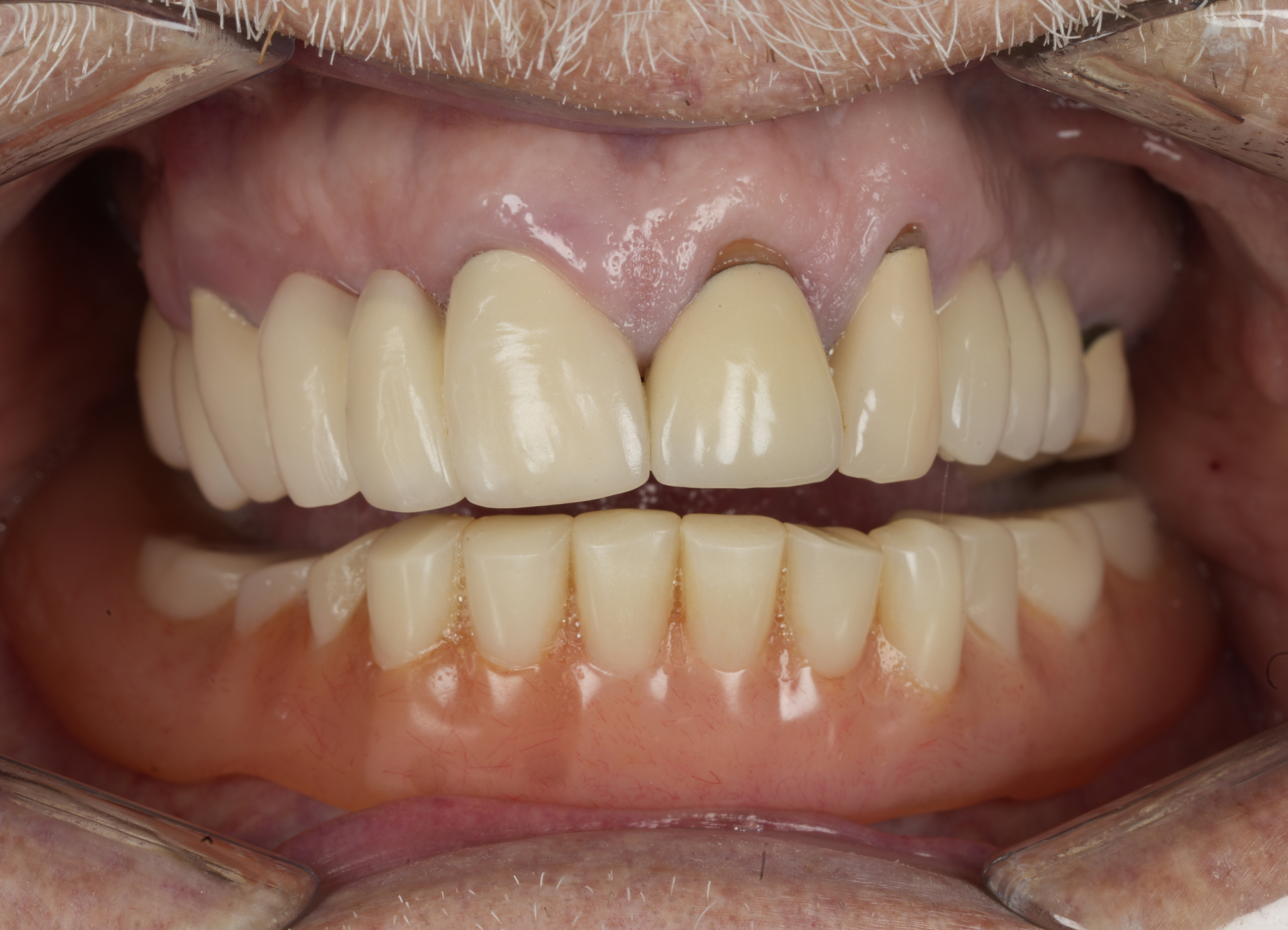
That was true for a patient who came to Dr. Goldenberg’s practice. A professional whose career depends on speaking in front of audiences, he had grown increasingly self-conscious about his smile. Standing in front of a room had become a source of embarrassment rather than confidence. He wasn’t looking for a repair. He wanted to feel like himself again.
His local dentist recommended upper and lower complete dentures. Unconvinced that removable prostheses were his only option, he drove three hours to find an alternative.
A Plan Built Around the Patient, Not a Single Technique
That decision reflects a broader reality. Patients with terminal dentition are often presented with limited options, and many will travel significant distances for a practice that offers something better. As Dr. Goldenberg puts it, “The way we communicate treatment possibilities can be the difference between a patient who feels resigned and one who feels hopeful.”
After a comprehensive diagnostic workup and coordinated planning among the restorative dentist, laboratory, oral surgeon, and periodontist, the team determined that both arches could be restored with fixed prostheses rather than removable dentures. The plan deliberately blended the new and the established. The upper teeth could be preserved through surgical crown lengthening, while the lower arch called for implants. New technology and sound restorative principles, working together toward one outcome.
Ninety Minutes from Scan to Smile
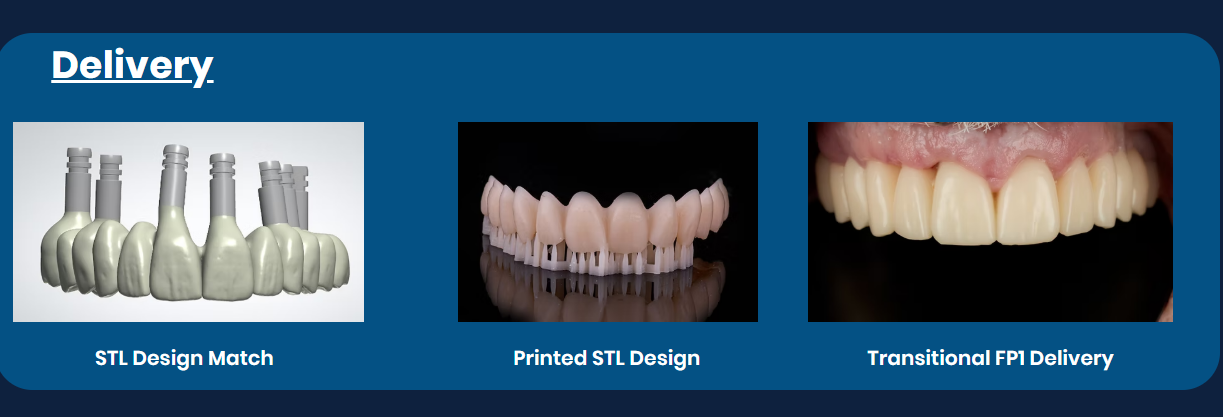
Everything was planned digitally before surgery, starting with where the teeth should be and working backward to the steps needed to put them there. On surgery day, the team executed that plan with a workflow most patients have never experienced: scan, design, print, deliver, all in a single visit.
From the moment the scan was sent to the lab, it took roughly ninety minutes to receive the designed provisional, print it, and deliver the restoration. The patient left that day with fixed lower teeth. No temporary denture. No weeks of waiting. No second appointment to seat a provisional.
A patient who arrived expecting removable dentures left surgery with fixed teeth and a confident smile.
There’s More to This Case
How the team refined the provisional during healing for better tissue adaptation. What the final zirconia restoration looked like at delivery. And the plan for completing the upper arch.
As Dr. Goldenberg says, “The technology alone did not produce this outcome. The workflow did.”