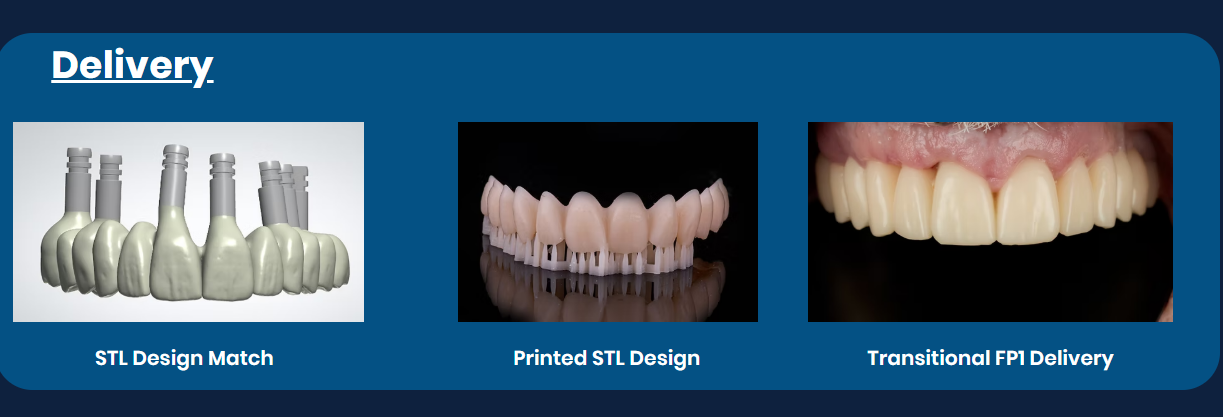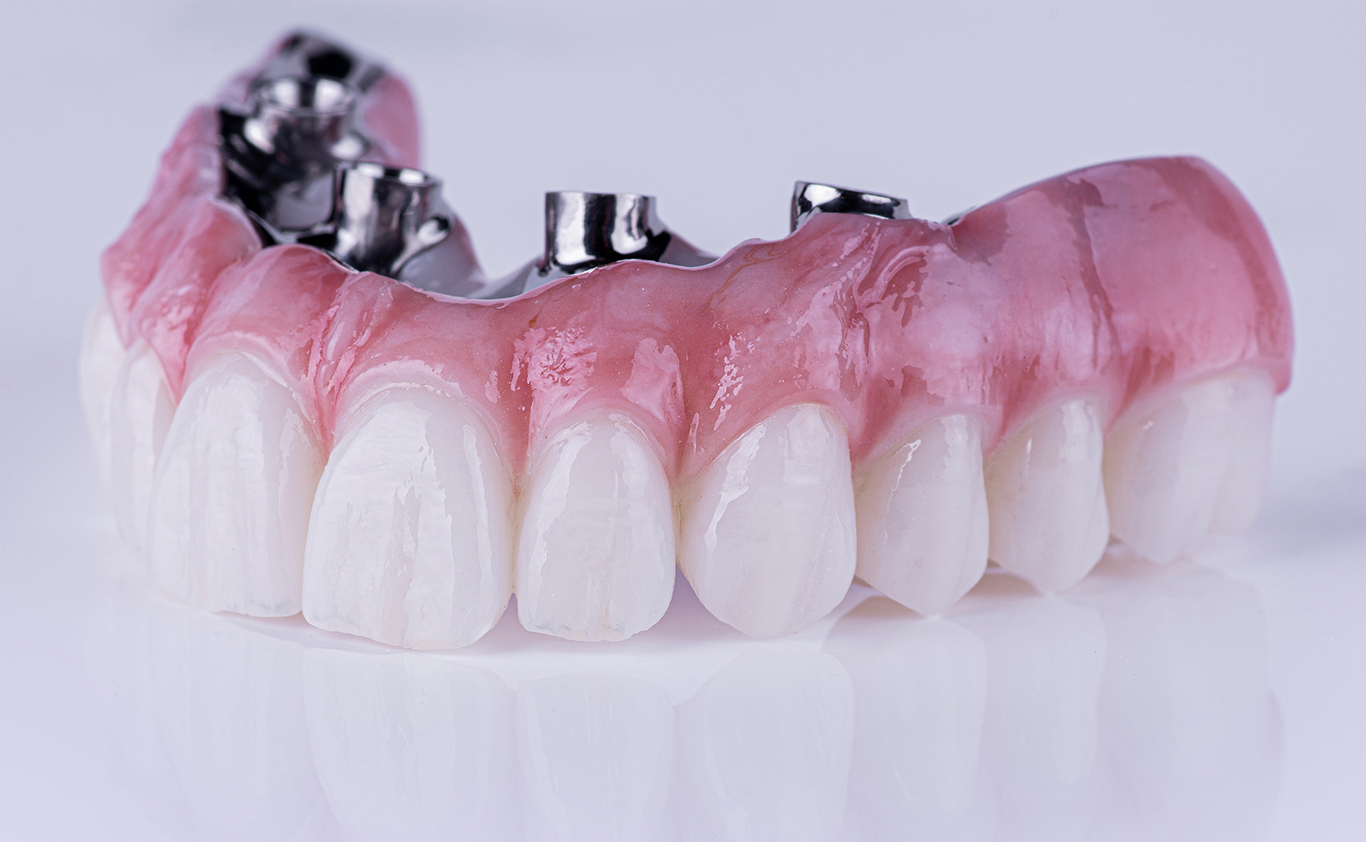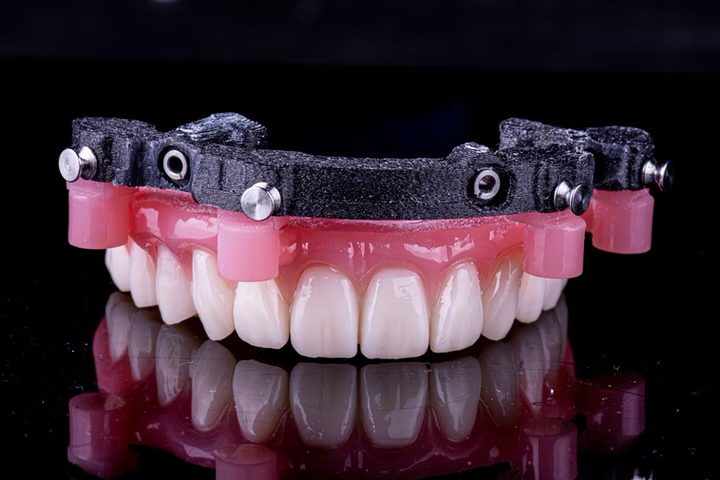

Digital dentures have evolved – fast. Thanks to intraoral scanners and advanced 3D printing, dentists and labs can now deliver beautifully fitting, esthetic removable prosthetics with less time, fewer appointments, and far more predictability. In this post, we walk through a recent case that shows how a fully digital denture workflow improves both the clinical experience and the patient’s outcome.
Section 1: Capturing the Scan and Designing the Prosthesis
The first step of a successful digital denture case is records. Whether scanning a light-body wash inside a patient’s current denture or directly scanning the edentulous arch, the key is completeness.
Scan checklist:
-
Working arch
-
Opposing dentition
-
Accurate bite registration
-
Full-face smile photo with the appliance in place
Once received, your Denbright lab overlays the digital design on the facial photo, helping ensure ideal anatomy, esthetics, and occlusion—right from the start.
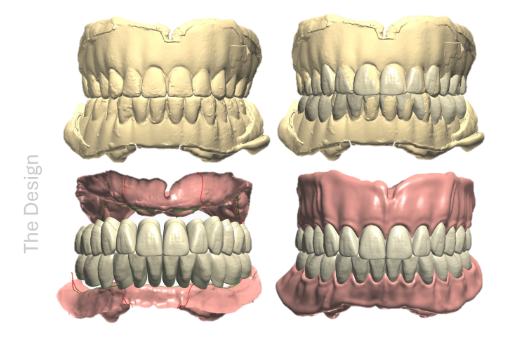
Top left: The doctor will do a light wash reline and scan the existing denture 360 degrees.
Top right and bottom images: The laboratory will design the new dentures per the RX.

A full-face, full smile photo is required and will be uploaded to the design file. The new denture will then be designed directly into the patient’s smile.
Section 2: 3D Printing and Lab Processing
After approval, the lab prints the denture components using Dentsply Sirona’s Lucitone Digital Print and IPN 3D Print for the teeth. The process ensures strong, detailed, and esthetically layered restorations.
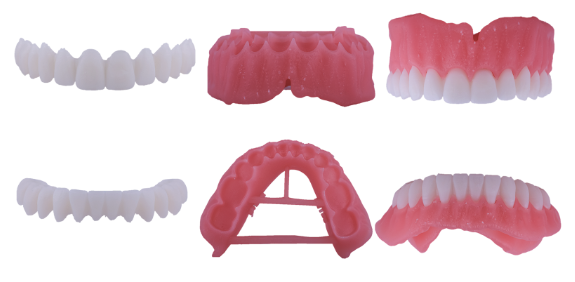
For this case the tooth structures were printed using IPN print and the bases were printed with Lucitone print.
After printing, each denture goes through:
-
Washing and curing
-
Precise finishing of intaglio, borders, and occlusion
-
Proprietary tooth-to-base fusion
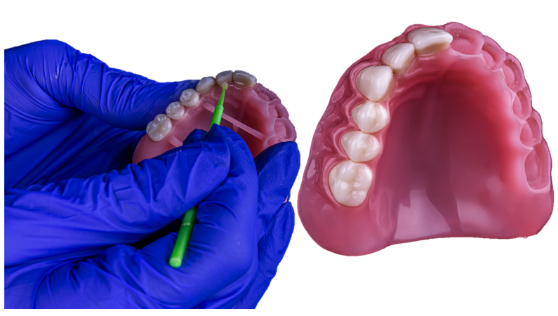
Using Dentsply’s proprietary process, the teeth are fused to the base
The result? Durable, highly esthetic prosthetics, ready for chairside delivery.
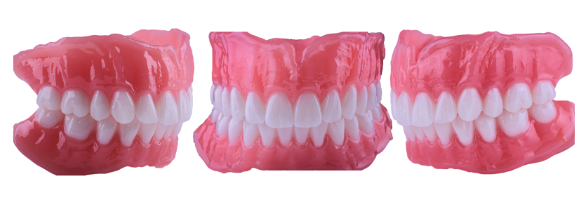
Section 3: Chairside Delivery & Clinical Outcome
When the denture is seated, minimal adjustment is required. Thanks to digital precision, the occlusion is typically spot-on, and the patient’s reaction says it all.
Doctor benefit: Faster delivery, more predictable workflow
Patient benefit: Better comfort, better fit, better esthetics
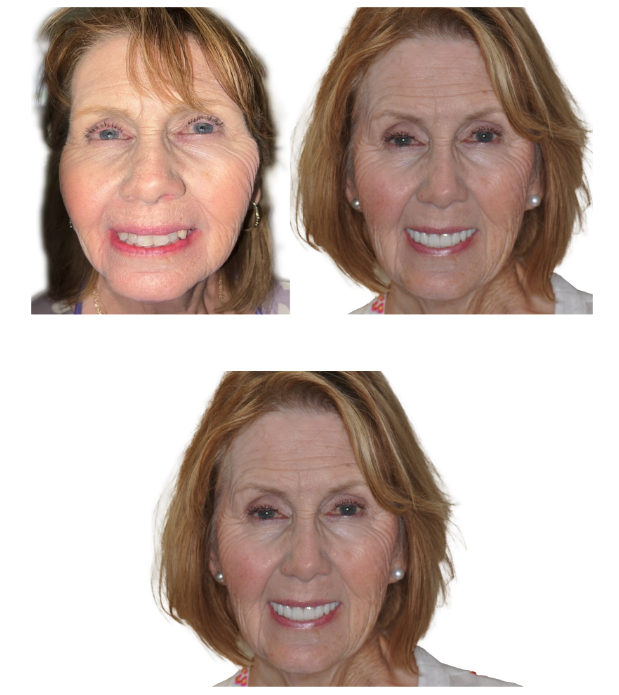
Section 4: The Hidden Benefit, Digital Record Archiving
Because all records are stored digitally, reorders are a breeze. If a patient loses, damages, or wears down their denture, you can request an immediate reprint, no new scans, no new photos, and no additional chair time.
Same great fit. No extra appointments. That’s the digital advantage.
Ready to simplify your denture workflow?
Contact your Denbright Lab to start your next case digitally.